

On September 18, 2026, U.S. President Donald Trump extended restrictions on the H-1B program for another 12 months, maintaining the requirement for a $100,000 payment for certain H-1B cases covered by the policy. The policy was originally introduced in September 2025 and was scheduled to expire in September 2026. According to the latest White House announcement, the restrictions have now been extended through September 2027.
$100,000 H-1B Payment Policy Extended
According to Reuters, H-1B is a nonimmigrant visa program that allows U.S. companies to hire highly skilled foreign workers, particularly in technology and other specialized occupations.
On September 19, 2025, the Trump administration introduced a policy requiring a $100,000 payment for certain H-1B cases. The policy was initially set to remain in effect for one year.
On September 18, 2026, the White House announced that the restriction would remain in place for another 12 months. According to the official statement, the entry into the United States of certain H-1B workers will continue to be restricted if the applicable H-1B petition is not accompanied by the $100,000 payment, except in certain cases that qualify for exemptions under the policy.
The White House stated that the policy will remain in effect through September 2027.
Not All H-1B Cases Are Subject to the $100,000 Payment
One important point is that this information should not be interpreted to mean that everyone currently holding H-1B status must pay an additional $100,000.
According to Reuters, the original policy did not apply in the same way to foreign nationals who were already in the United States on student visas and later changed to H-1B status, or to existing H-1B visa extensions.
The new White House announcement focuses on certain H-1B workers outside the United States who need to enter the country to perform work under H-1B petitions covered by the policy. In addition, the U.S. Secretary of Homeland Security has the authority to determine whether certain individuals, companies, or industries may qualify for exemptions when their employment is considered to be in the national interest and does not pose a threat to the security or welfare of the United States.
Therefore, the scope of the policy should be assessed on a case-by-case basis rather than understood as a new fee imposed uniformly on all H-1B holders.
Why Is the Trump Administration Continuing This Policy?
The White House argues that some companies, particularly staffing firms and information technology outsourcing businesses, have used the H-1B program in ways that reduce employment opportunities or put downward pressure on wages for U.S. workers. This is the Trump administration’s stated rationale for continuing the restrictions.
On the other hand, Reuters reported that companies and business organizations argue that the H-1B program plays an important role in helping U.S. employers recruit highly skilled workers and address shortages of qualified workers in certain fields. H-1B is particularly important to the technology industry and the recruitment of workers from countries such as India and China.
The H-1B policy therefore remains an issue on which the administration, businesses, and other stakeholders hold differing views.
The $100,000 Policy Still Faces Legal Challenges
The extension does not mean that legal disputes over the $100,000 payment have ended.
Reuters reported that a federal appeals court in Boston is reviewing a June ruling by a federal judge that found the higher fee imposed by the administration unlawful and blocked the government from collecting the payment.
Another case is also considering a legal challenge to the policy involving the U.S. Chamber of Commerce.
Therefore, although the White House has extended the policy for another year, the legal status of the $100,000 payment remains an issue to watch.
U.S. Companies May Adjust Their Hiring Plans
According to Reuters, changes in H-1B adjudication and processing have affected the hiring and expansion plans of some companies.
Some businesses that rely heavily on H-1B workers have begun adjusting their workforce strategies. Reuters cited Alphabet, Google’s parent company, as an example, noting that it has expanded operations in India amid changes in the U.S. environment for hiring foreign workers.
This shows that changes to H-1B can affect not only foreign workers but also how U.S. companies organize their workforce and international operations.
H-1B and EB-3 Are Not the Same Visa Category
For people exploring opportunities to work and immigrate to the United States, it is especially important to distinguish between H-1B and EB-3.
H-1B is a nonimmigrant category primarily intended for specialty occupations that meet the program’s requirements. Workers are permitted to come to the United States and work for a certain period while maintaining H-1B status.
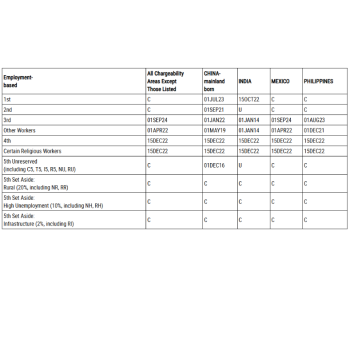
EB-3, on the other hand, is an employment-based immigrant visa category that includes Skilled Workers, Professionals, and Other Workers. Therefore, the $100,000 payment requirement affecting certain H-1B cases does not mean that EB-3 applicants are required to pay this $100,000 amount.
This distinction is important when following new developments in U.S. immigration policy. Although H-1B and EB-3 are both related to employment, their purposes, eligibility requirements, and procedures are fundamentally different.
Further H-1B Changes Should Be Closely Monitored
The one-year extension shows that H-1B policy continues to undergo significant changes in 2026. In addition to the $100,000 payment, the White House announced further measures on September 18 to increase coordination among government agencies and strengthen scrutiny of the H-1B program.
However, because the $100,000 policy remains involved in ongoing legal challenges, workers and employers should continue to follow official information rather than relying solely on headlines or information circulating online.
For those exploring EB-3, the most important point is not to confuse changes to the H-1B program with policies that apply to EB-3. They are two different categories within the U.S. immigration system.